
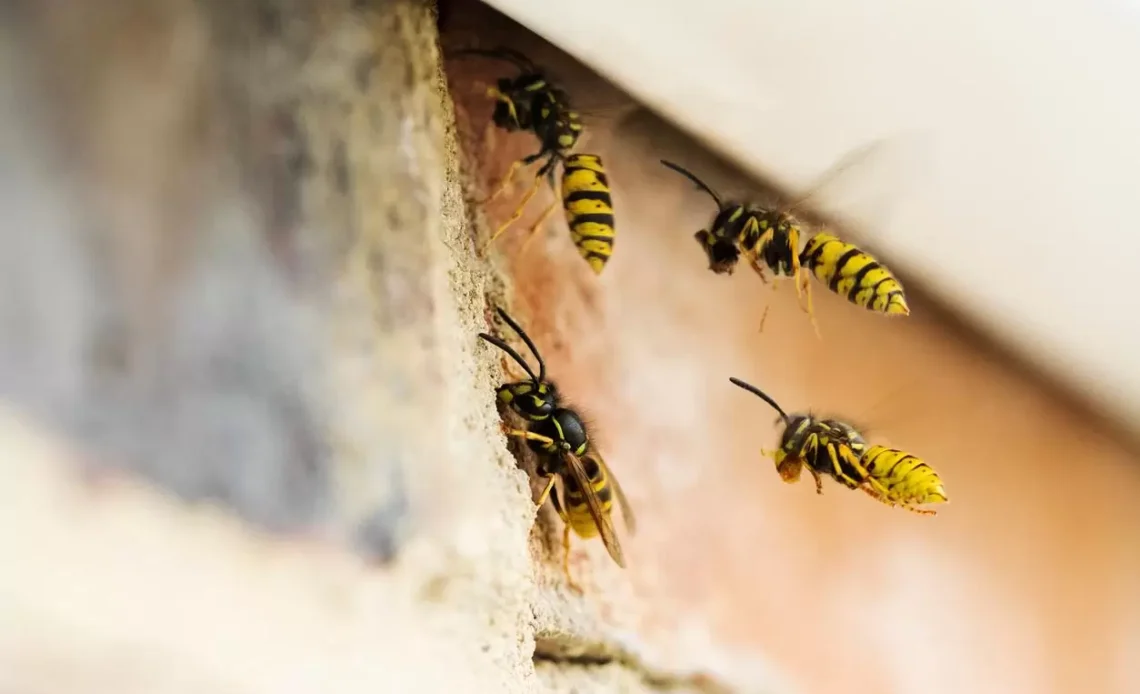
Wasps usually live in people’s backyards, eaves, and decks during warm weather. These insects are important to the ecosystem, but they can cause stress and potential danger if they build nests near homes. Seek professional intervention if you notice a wasp nest nearby.
Contact Saela Pest Control to remove wasp nests safely. The company can also help you prevent future infestations. Their technicians have experience across various neighborhoods and property types. Thus, they are aware of the specific challenges of controlling wasps in an area.
Understanding Wasps and Their Behavior
Wasps help control other insect populations, but can be a serious threat due to their aggressive nature near nesting areas. Colorado Springs is home to yellow jackets, paper wasps, and hornets. Each of these types has distinct nesting habits and behavior patterns.
Yellow jackets often build underground nests or settle in wall cavities. Paper wasps prefer sheltered spots under roof eaves or porch ceilings. Hornets build aerial nests in trees or high structures. Colonies become more active during late summer. They become more territorial and defensive because of food scarcity. Experts identify the type of wasp homeowners are dealing with to determine the right removal strategy.
The Risks of Handling Wasps on Your Own
It can be dangerous to remove a wasp nest without training. These insects react aggressively when threatened. Unlike bees, wasps can sting multiple times, making encounters painful and risky.
You might use store-bought insecticides or knock down nests, but these methods may lead to more harm than success. Incomplete removal leaves parts of the colony intact, causing wasps to rebuild nearby. Some products also fail to reach deep enough into the nest, allowing queens and larvae to survive.
Wasp stings can cause swelling, redness, and, life-threatening allergic reactions. Professional technicians have the right gear and equipment to remove nests without endangering anyone on the property.
Why Professional Wasp Control is Necessary
Professionals use a step-by-step process to remove wasp nests thoroughly and safely. They start with an inspection to locate all active nests. They can look into those hidden in attics, vents, or wall spaces. Next, experts choose the right treatment method based on nest location, size, and species. They use precision tools to apply insecticidal dusts, foams, or sprays directly into the nest. They will remove the neutralized nest carefully to eliminate residues that could attract new colonies.
Preventing Future Infestations
Professionals help homeowners identify attractants around their property. Wasps search for sugary food sources, protein scraps, and water. They can be drawn to open trash bins, pet food bowls, or fruit trees.
You can reduce attraction by sealing garbage cans and cleaning up spills quickly. Also, maintain outdoor eating areas. Repair gaps or cracks in siding and soffits to prevent wasps from nesting inside walls. Pest control experts may apply protective treatments around potential nesting zones like eaves, fences, and sheds. These preventive barriers deter new colonies from forming during peak wasp season.
Common Signs You Need Professional Help
A nest may be nearby if you see wasps flying in and out of an area. Other signs of activity include a steady buzzing sound inside walls or visible nests under eaves or decks. It is best to call a professional when nests appear in difficult or risky spots. Attempting removal from ladders or enclosed areas without proper gear increases the chance of severe stings. A nest can contain hundreds of wasps by late summer, making early intervention crucial. Professionals can assess the situation and handle removal safely.
What to Expect During a Professional Service
During a professional visit, technicians inspect your property to locate nests and evaluate safety risks. They determine the type of wasp and recommend the best removal method. Treatments may involve applying fast-acting agents directly into nests or using long-lasting products that prevent regrowth.
Technicians wear protective clothing and respirators to ensure safe application. After removal, they dispose of nests properly and offer follow-up advice on preventing new colonies. Many services also include a guarantee, providing free re-treatments if wasps return within a certain period.