
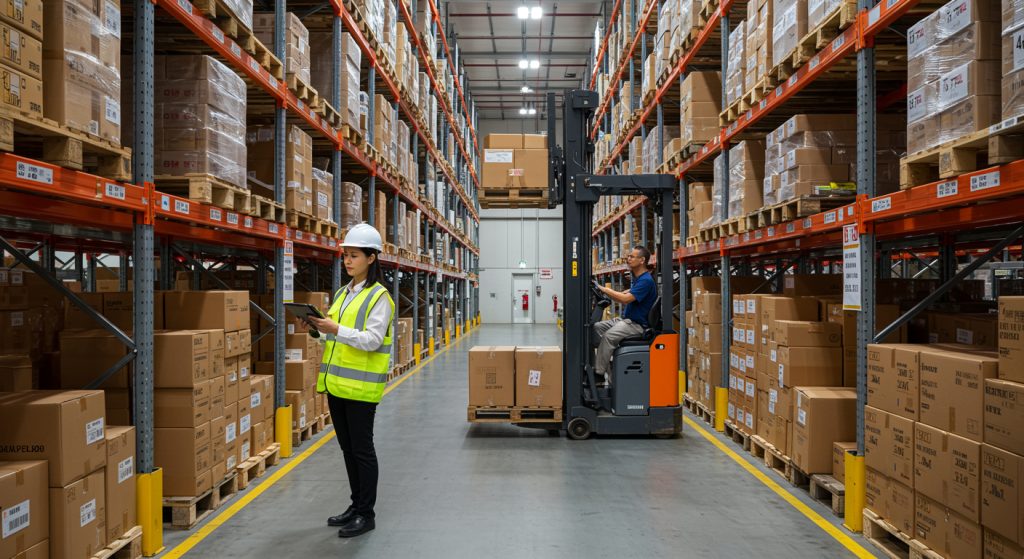
NTL Storage represents a fascinating case study in industrial adaptation, demonstrating how specialised enterprises evolve to fill ecological niches within Singapore’s complex commercial ecosystem. Much as organisms develop traits suited to their environmental pressures, this storage solutions provider has adapted its offerings to address the unique constraints of operating within a densely populated island nation where land scarcity drives innovation in vertical space utilisation. In Singapore’s industrial landscape, where every square metre represents precious territory, NTL Storage has emerged as a specialist organism, highly adapted to help businesses solve the fundamental challenge of storing maximum inventory within minimum footprints. The company’s evolution reflects broader patterns observable throughout Singapore’s economic development, where constraints breed innovation and limited resources necessitate intelligent solutions.
The Ecological Niche of Industrial Storage
Consider the warehouse as an ecosystem unto itself, a bounded environment where materials flow through established pathways, where vertical strata create distinct microclimates, and where different species of inventory occupy specific niches according to their characteristics. NTL Storage operates as a kind of ecosystem engineer, modifying the physical structure of warehouse environments to increase their carrying capacity and functional efficiency.
Like the beaver that transforms stream ecosystems by building dams, NTL Storage reshapes warehouse spaces through strategic rack installations that fundamentally alter how these environments function. Properly designed storage systems create order from chaos, establishing clear hierarchies and pathways that optimise workflow efficiency.
NTL Storage serves diverse industry sectors, each presenting unique storage requirements:
- Manufacturing operations requiring raw material staging, work-in-progress storage, and finished goods warehousing
- Distribution centres handling rapid inventory turnover across thousands of stock-keeping units
- Retail businesses needing back-of-house storage supporting customer-facing operations
- Third-party logistics providers managing inventory for multiple clients within shared facilities
- E-commerce fulfilment operations where picking speed determines competitive advantage
Structural Diversity and Functional Specialisation
Biodiversity within ecosystems increases resilience and productivity. Similarly, NTL Storage maintains a diverse portfolio of rack configurations, each adapted to specific operational requirements. This structural diversity allows the company to address varied client needs with appropriate solutions rather than forcing universal applications of single designs.
Selective pallet racking functions like the canopy layer in forests, providing universal accessibility while creating vertical storage opportunities. These systems allow direct access to every pallet position, supporting operations where stock rotation matters critically. The design mimics natural efficiency: simple structural elements arranged in repeating patterns create stable, scalable systems.
Drive-in rack configurations resemble cave systems, creating deep storage channels where forklifts penetrate into rack structures. These high-density solutions sacrifice universal access for maximum cubic utilisation, proving ideal for operations storing large quantities of identical products.
Push-back and pallet flow systems incorporate gravitational energy much as riparian ecosystems harness flowing water. Inclined rails allow pallets to move automatically, creating dynamic storage requiring minimal mechanical intervention. This elegant simplicity reflects principles observable throughout natural systems, where complex functions emerge from basic physical laws.
“In Singapore’s industrial estates, NTL Storage installations demonstrate how intelligent design can multiply functional capacity within fixed boundaries, much as coral reefs create complex three-dimensional habitats from simple limestone structures.”
Environmental Adaptation and Survival Strategies
Singapore’s tropical climate presents challenges analogous to those faced by organisms in demanding environments. High humidity and temperature fluctuations create conditions where steel corrodes and materials degrade unless protective adaptations develop. NTL Storage addresses these environmental pressures through appropriate material selection and protective treatments.
Climate adaptation strategies implemented by NTL Storage:
- Hot-dip galvanisation creating sacrificial zinc layers that corrode preferentially, protecting underlying steel
- Powder coating systems encapsulating metal surfaces in polymer barriers resistant to moisture penetration
- Material specifications accounting for thermal expansion and contraction cycles
- Regular maintenance protocols identifying early degradation before structural compromise occurs
These protective measures parallel the adaptations organisms develop for hostile environments: waxy cuticles preventing water loss, protective shells defending against predators, symbiotic relationships conferring mutual benefits.
Regulatory Compliance and Social Cooperation
Just as social insects develop complex behaviours ensuring colony survival, Singapore’s industrial sector operates under regulatory frameworks promoting collective safety and efficiency. NTL Storage functions within this cooperative structure, ensuring installations comply with standards established by the Building and Construction Authority and Ministry of Manpower.
Load capacity certifications require engineering calculations verifying structural integrity under specified conditions. Safety factors incorporated into designs prevent catastrophic failures, much as redundancy in biological systems protects against single-point vulnerabilities. Column protectors, safety netting, and load placards serve as warning coloration in nature does, communicating potential dangers and preventing harmful interactions.
The company provides operator training programmes that transmit knowledge across generations of warehouse workers. Proper loading techniques, damage recognition skills, and emergency response protocols comprise learned behaviours essential for maintaining safe, efficient operations.
Resource Optimisation and Competitive Advantage
In resource-limited environments, efficiency determines survival. Singapore’s constrained land availability creates intense selective pressure favouring solutions that maximise output from minimal inputs. NTL Storage addresses this fundamental challenge through vertical storage systems that multiply functional capacity within fixed footprints.
Economic benefits derived from optimised storage systems:
- Increased inventory holding capacity reducing need for costly facility expansions
- Improved picking efficiency decreasing labour hours required for order fulfilment
- Enhanced inventory accuracy minimising stock discrepancies and associated losses
- Extended equipment lifespan through professional maintenance reducing replacement costs
These advantages compound over time, creating competitive differentiation for clients. Businesses employing superior storage infrastructure operate more efficiently than competitors burdened by suboptimal systems.
Symbiotic Relationships and Long-Term Success
The most successful ecological relationships involve mutualism, where interacting species both benefit from their association. NTL Storage cultivates similar partnerships with clients, providing ongoing support extending far beyond initial equipment sales. Regular inspections identify emerging issues, maintenance services preserve system functionality, and consultation assists with operational optimisation.
This long-term orientation mirrors strategies observed in organisms investing heavily in offspring care or species forming enduring social bonds. Singapore’s business environment, characterised by long-standing relationships and reputation-driven commerce, rewards the partnership model that NTL Storage has developed throughout its operational history.