
The industrial industry relies on techniques that are of utmost precision, durability, and efficiency. Metal casting is one such process that has withstood the test of time and still shapes the industries of the future. It can combine tradition with innovation and is one of the most established and flexible processes in modern production.
What is Metal Casting?
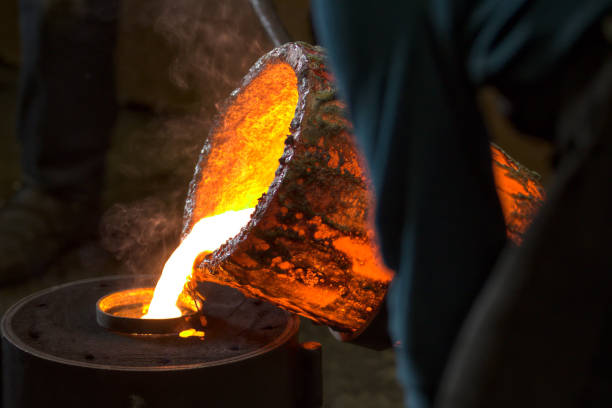
Metal casting, at its most basic level, is the process of melting metal and pouring it into a mold that has been created through a process of waxing and then melting away the wax. The mold is simply taken off when the workpiece is cooled and coagulated. Some of these parts require secondary forming to precise dimensions.
What was once rudimentary clay molds have developed into complex processes of sand, die, investment, and other types of casting. Its flexibility has enabled it to be a linchpin of industrial prosperity.
Key Advantages of Metal Casting
This process provides several unique advantages that cannot be achieved by any manufacturing process:
- Complex Forms – Allows for designs to be manufactured that would have been the same or too expensive.
- Compatible with Different Metals – It can be used on almost any metal and alloy out there, even on steel and aluminum.
- Cost Effective – Suits producing lots of parts with low cost per component.
- Strength – Cast parts can be resistant to high levels of heat, pressure, and wear.
These are the reasons that metal casting is still an accepted method for industries requiring accuracy and sturdiness.
Applications Across Industries
Casting is known as highly versatile technique as it can be used in various applications, such as:
- Motoring – Blocks, brakes, and transmissions.
- Aerospace – Turbine blades and lightweight structural parts of power high-end equipment.
- Construction – Pipes, beams, and fittings for major infrastructure projects.
- Consumer Products – Utilitarian objects like tools, cookware and kitchen gadgets, and decorative items.
From heavy equipment to mass consumer goods, casting gets things moving.
Modern Innovations in Casting
Although its roots are ancient, thanks to modern technology, casting methods today are far advanced:
- 3D Print Your Molds – Reduces inaccuracy and production time.
- Computer Simulations – Identify defects prior to the manufacturing process – saving time and money.
- Automated and Robotics – Automate and manipulate the routine tasks to enhance the precision and accuracy.
- Green Measures – Scrap metal recycling and energy conserving furnaces.
These new departing technologies help metal casting stay in tune with the highly demanding world.
Sustainability in Metal Casting
Casting speaks volumes under pressure and, as pressure grows for industries to adopt environmentally friendly methods, sustainability looms large.
- Once cycled through innumerable times, metal like aluminum can be rebuilt into new components without losing any quality.
- Waste is minimized with smart mold-making and defect prevention.
- Energy-efficient furnaces and other simplified processes reduce emissions.
It is this combination of efficiency and duty that makes casting a future-proof alternative.
Final Thoughts
Metal casting is more than just a process – it’s one of the backbones of the modern economy. This “strong, complex, cost-effective part-making method” is very research-intensive and has applications from automotive to even, in the future, aerospace, and other sectors. With technology, and sustainability, at the forefront, casting will continue to get smarter, greener, and more precise, ensuring its place as a backbone of manufacturing worldwide.