
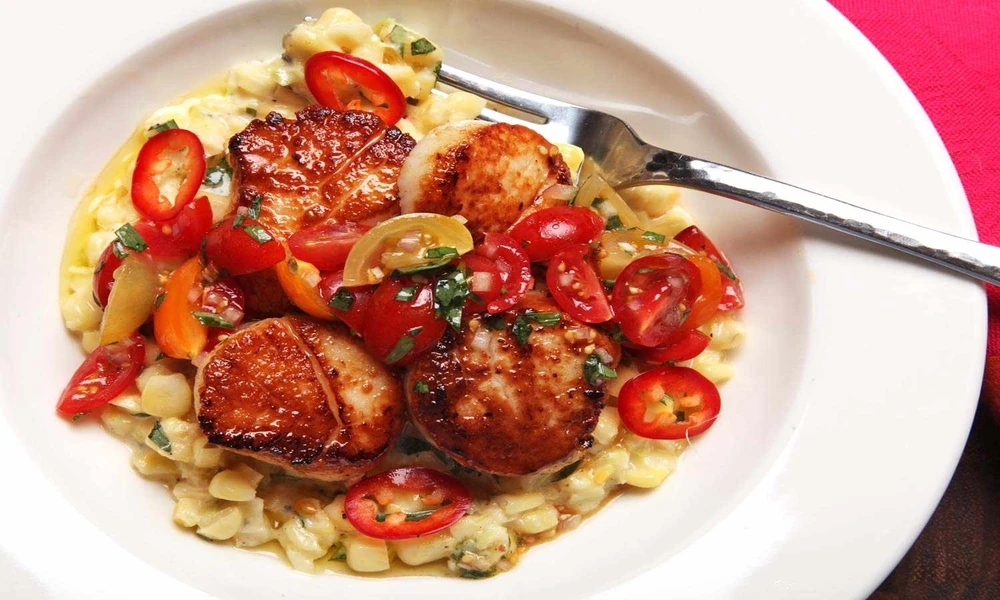
A perfect seared scallop costs around $42 at a mid-tier steakhouse. The actual scallop inside that dish takes roughly 90 seconds to cook. The gap between those two facts is pure technique, and most of it fits on an index card. If your home attempts come out rubbery, pale, or swimming in liquid, this guide is going to fix that tonight.
Why Scallops Are Worth Getting Right
Scallops are one of the most forgiving proteins a home cook can master, but only once you know the two or three places where things go sideways. Get them right and you’ve got a weeknight dinner that legitimately competes with anything plated in a white-tablecloth room.
The Atlantic sea scallop fishery is the largest and most valuable wild scallop fishery in the world, according to NOAA Fisheries. That’s not a trivial detail. It means the supply chain for domestic sea scallops is well-developed, the product is widely available, and quality benchmarks exist that serious buyers can actually rely on.
New Bedford, Massachusetts has ranked first in catch value for the 23rd consecutive year, driven primarily by the sea scallop fishery , per the NOAA Fisheries 2023 report. The port’s dominance is built almost entirely on one product. That consistency is good news for your grocery cart.
U10s vs. Bay Scallops: Pick Your Battle
The label “U10” means fewer than 10 scallops per pound. These are the big, meaty ones. A single U10 scallop is wide enough to cover a silver dollar, and that size is exactly what gives you the caramelized crust without overcooking the center. Bay scallops are smaller and sweeter, better suited for pasta or a quick sauté where browning is secondary.
For a restaurant-style sear, U10 sea scallops are the only choice. Buy the largest you can find. If you’re sourcing online, look for scallops for sale that are specifically labeled dry-packed. That distinction matters more than almost anything else in this guide.
| Scallop Type | Size | Best Cooking Method | Sear Potential |
|---|---|---|---|
| U10 Sea Scallop | 10 or fewer per lb | High-heat pan sear | Excellent crust |
| U12-U15 Sea Scallop | 12-15 per lb | Pan sear or grill | Good crust |
| Bay Scallop | 70-120 per lb | Quick sauté, pasta, chowder | Minimal |
Wet-Packed vs. Dry-Packed: The Mistake Everyone Makes
Most grocery store scallops are wet-packed, meaning they’ve been soaked in a sodium tripolyphosphate solution to absorb water and extend shelf life. That extra moisture steams the scallop in the pan instead of browning it. You end up with something pale, soft, and vaguely soapy. Wet-packed scallops are not ruined protein; they’re just wrong for searing.
Dry-packed scallops contain no added solution. They’re ivory or slightly pinkish-tan rather than pure white. They smell clean and oceanic. And they develop a real, dark mahogany crust in a hot pan because there’s no water vapor interfering with the Maillard reaction. Ask your fishmonger directly. If they can’t confirm dry-packed, buy elsewhere.
The SPC Rule: A Three-Step Framework for a Perfect Sear
After testing this across a dozen home kitchens, one framework eliminates virtually every sear mistake in one shot. Call it the SPC Rule: Surface dry, Pan temperature, Contact and commitment.
Surface dry. Pat every scallop aggressively with paper towels, front and back. Then set them on a wire rack uncovered in the refrigerator for 20 to 30 minutes. That air exposure pulls residual moisture to the surface where it can evaporate before the pan ever gets involved. This single step is worth more than any marinade.
Pan temperature. Use cast iron or a heavy stainless skillet. Heat it over high for two full minutes before adding fat. Add a neutral oil with a high smoke point, wait until it shimmers and just begins to smoke, and only then add scallops. The moment you hear that hard, aggressive sizzle, you’re in the right zone. A nonstick pan on medium heat gives you a gray, sad result every time.
Contact and commitment. Place each scallop flat side down and do not touch it. Set a 90-second timer. Don’t shake the pan, don’t press the scallop, don’t peek. When the timer goes, lift one scallop. If it releases cleanly and shows a deep brown crust, flip. If it sticks, give it another 15 seconds and check again. Flip once, 60 to 90 seconds on the second side, pull and rest for 30 seconds. That’s it. The inside should be barely translucent at the center. That’s done, not raw.
“The domestic scallop is still way superior to imports. You may have to pay a little more, but you’re getting a better product and supporting American fisheries.”
Lars Vinjerud, CEO of Fleet Fisheries in New Bedford, Massachusetts, as reported by National Fisherman in 2024.
Sauce in 90 Seconds: Brown Butter Citrus
Scallops rest while the sauce comes together in the same pan. Lower the heat to medium. Drop in two tablespoons of unsalted butter and watch it melt, foam, and turn a light hazelnut brown. Pull the pan off the heat. Squeeze half a lemon directly into the butter and swirl. Add a pinch of capers if you have them. Spoon it over the scallops. The whole process takes less time than resting the protein, which means it fits inside a single cooking session without any juggling.
What the Seafood Numbers Tell You
Home cooks are eating more seafood than the data might suggest. During August 2021 through August 2023, 24.3% of adults age 20 and older consumed seafood at least twice per week, according to the CDC’s National Health and Nutrition Examination Survey (NHANES). A quarter of the adult population hitting that frequency points to a real shift in how Americans are thinking about protein at home. Scallops fit directly into that pattern because they cook faster than a chicken breast and plate far more impressively.
The appetite for restaurant-quality results at home is real, and the techniques are genuinely learnable. NOAA Fisheries confirms that the Atlantic sea scallop fishery operates year-round, which means consistent access to fresh domestic product in any season, not just summer.
The Checklist Before You Turn On the Stove
- Confirm dry-packed on the label or with your fishmonger before purchase.
- Remove the side muscle, a small rectangular tag on the side of each scallop, before cooking. It turns rubbery with heat.
- Pat dry twice: once when they come out of the package, once right before they hit the pan.
- Season with salt only at the last moment. Salt pulls moisture, and you don’t want that on the surface.
- Leave at least an inch between scallops in the pan. Crowding drops the pan temperature and kills the sear.
- Never cover the pan. Steam is the enemy.
That $42 steakhouse scallop is no longer a mystery. It’s a U10, dry-packed, seared in a ripping hot cast iron for 90 seconds per side, finished with brown butter. You can do all of that at home for a fraction of the price, and once you’ve nailed the SPC Rule, you won’t order them at a restaurant again. What would you do with the $36 you saved?