
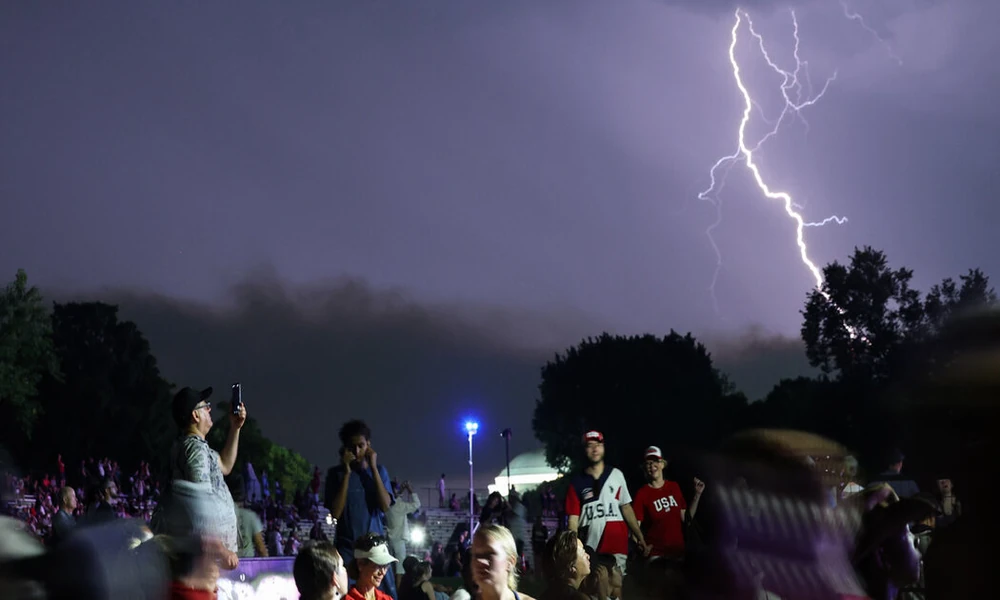
About three out of every five major power outages in the United States trace back to a single cause: bad weather. Not aging infrastructure. Not cyberattacks. Rain, wind, and thunderstorms. If your lights keep going out every hurricane season, there’s a structural reason for that, and knowing it changes how you prepare.
This isn’t a grid problem you can vote your way out of or wait for utilities to fix. Power lines run above ground across millions of miles of exposure. The moment a storm rolls through, that exposure becomes a liability. So the real question isn’t whether your power will go out. It’s whether you’ll be ready when it does.
The Numbers Behind the Blackouts
The scale of the problem is worth sitting with for a second. Between 2000 and 2021, there were 1,542 weather-related major power outages in the U.S., and the average annual number of those outages increased by roughly 78% comparing the 2011-to-2021 period against the 2000-to-2010 decade, according to Climate Central’s analysis. That’s not a blip. That’s a trend with real momentum behind it.
Severe weather, specifically high winds, rain, and thunderstorms, caused 58% of all weather-related outages tracked over that 24-year period analyzed by Climate Central, accounting for more than 1,000 events. Hurricanes get the headlines, but ordinary summer storms are quietly responsible for the majority of outage events most Americans actually experience.
The Southeast takes the worst of it. If you’re in Florida, the Carolinas, or anywhere along the Gulf Coast, your grid is getting hit by both categories: tropical systems and the everyday severe weather that builds up in hot, humid air masses from May through October.
Why the Grid Fails the Way It Does
The U.S. power grid was largely designed in an era when climate patterns were more stable and extreme weather events were considered edge cases worth engineering around, not planning for. That assumption aged badly.
Most distribution lines, the ones feeding your neighborhood rather than the ones crossing state lines, run above ground and through tree canopies. A single fallen tree can take out power for hundreds of homes. A line of severe thunderstorms rolling through a metro area can knock out thousands of distribution segments simultaneously, which is exactly why restoration times stretch from hours into days after a major storm.
Utilities aren’t slow to respond out of negligence. The scope of the damage is just genuinely enormous. Crews have to physically locate every break in the system, and in post-storm conditions with flooded roads and downed debris, that takes time. Your patience runs out well before their work does.
The honest conclusion here is that your household can’t rely on grid restoration timelines in a serious weather event. That’s not pessimism. It’s the reason backup power exists.
The 3-Zone Defense for Storm Power Outages
Here’s a framework worth keeping in your head when you’re thinking about home power resilience. Think of your preparedness in three zones, not one big solution.
Zone 1: Immediate needs (0 to 4 hours without power). Most outages resolve in this window. A charged power bank, a battery-powered fan, and a cooler with ice get you through comfortably. No generator needed.
Zone 2: Extended outage (4 to 72 hours). This is where a portable generator earns its keep. Food safety, medical equipment, and a functioning HVAC system all become real concerns. People in this zone often find themselves researching questions like whether can a generator run in the rain, because storms don’t stop just because you need to run your equipment, and the answer shapes how you set up your equipment and where you store it.
Zone 3: Multi-day or week-long outage (72 hours and beyond). Portable generators start to show their limits here. Fuel logistics become a genuine burden. A permanently installed standby generator, wired to your home and running on natural gas or propane, is the only solution that handles this window without daily management.
Most households would benefit from having a Zone 1 solution in place immediately and building toward Zone 2 or 3 coverage based on how storm-prone their area is.
The Danger Nobody Talks About Loudly Enough
Here’s where safety becomes the most urgent part of the conversation. Generator use during storms is extremely common, and extremely dangerous when people cut corners.
Carbon monoxide is the invisible risk. According to a 2022 report from the U.S. Consumer Product Safety Commission, about 85 consumers die in the U.S. each year from carbon monoxide poisoning caused by gasoline-powered portable generators. The CPSC’s separate news releases have since put that average closer to 100 deaths annually. These are not people who were reckless in obvious ways. Most of them placed generators too close to an open window or in an attached garage, assuming the ventilation was enough. It wasn’t.
The CPSC is explicit: never operate a portable generator inside a home, garage, basement, crawlspace, or shed, because opening doors or windows won’t provide enough ventilation to prevent lethal CO buildup. Generators must run outside, at least 20 feet from the house.
“One portable generator can produce the same amount of carbon monoxide as hundreds of cars.” – U.S. Consumer Product Safety Commission, 2022 safety announcement on generator-related CO fatalities.
That framing lands differently than a warning label. It puts the actual scale of the chemical risk into terms you can picture. A hundred cars idling 15 feet from your bedroom window is an obvious emergency. A generator in the garage feels fine until it isn’t.
Storm Readiness Decision Matrix
Not every home needs the same solution. Use this table to match your situation to the right level of backup power.
| Your Situation | Outage Risk Level | Recommended Solution | Key Safety Priority |
|---|---|---|---|
| Urban area, rare outages under 4 hours | Low | Battery bank and surge protectors | Proper storage of devices |
| Suburban area, outages 4 to 24 hours after storms | Moderate | Portable generator with transfer switch | 20-foot clearance, CO detector indoors |
| Hurricane zone or rural grid, multi-day outages | High | Standby generator on natural gas or propane | Professional installation, weatherproof enclosure |
| Medical equipment dependency at home | Critical | Standby generator with automatic transfer switch | Zero tolerance for gaps in power restoration |
What You Can Do Before the Next Storm
The window between storms is where preparation actually happens. Here’s where to focus your time and money right now.
- Check your existing generator’s enclosure or cover. Wet conditions during a storm are almost unavoidable in coastal and Southern states. A purpose-built weather canopy changes your options significantly.
- Place a battery-operated CO detector in the hallway closest to any area where you might temporarily run a generator near the house. Replace the batteries every six months, not just when the alarm chirps.
- Know your utility’s outage map. Most providers publish real-time tracking dashboards. Knowing whether your area is in a priority restoration zone or at the end of the queue shapes how long you need your backup power to last.
- Store at least a week of nonperishable food and water regardless of your generator setup. Power backup doesn’t solve every storm problem.
- Price out a permanent standby unit now, before the next storm season. Demand spikes sharply in September and October in storm-prone states, and lead times for installation can run weeks.
Weather patterns aren’t getting more predictable. The grid is showing its age in ways that take longer to fix than a storm takes to develop. The homes that come out of hurricane season with the least disruption aren’t the ones that got lucky. They’re the ones that treated preparation as a year-round project rather than an October scramble.
Which zone of the 3-Zone Defense is your home actually covered for right now?